Construction Issues Plaguing Data Center Developers
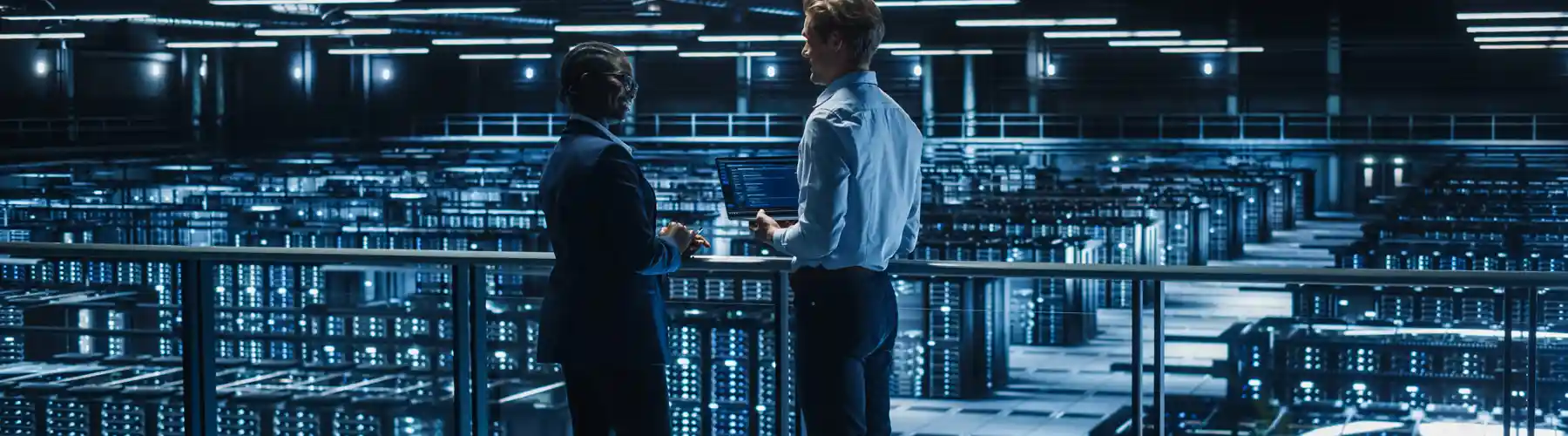
As data center development accelerates across the United States, owners and investors face increasing pressure to deliver infrastructure that is reliable, efficient, scalable, and commercially viable. These projects are no longer conventional construction efforts; they are critical assets where performance, reliability, long-term operability, and risk control must be considered from the earliest planning decisions through design, construction, commissioning, and operational readiness.
Data centers present a complex intersection of technical, commercial, regulatory, and community-relation challenges, including power availability and reliability, cooling efficiency, redundancy strategy, utility coordination, permitting, commissioning rigor, supply chain constraints, and speed-to-market expectations. Successfully managing these demands requires more than coordination. It requires disciplined owner advocacy, clear stakeholder alignment, proactive risk management, and early identification of blind spots before they create cost, schedule, or operational consequences.
Productive Outcomes serves as an Owner’s Representative, acting solely in the best interest of the owner and investors across the full lifecycle of capital projects.
Datacenter (DC) development is increasingly constrained by a set of systemic issues that determine whether projects advance on schedule or stall indefinitely. We have found the major areas of risk shaping the data center boom are: power availability, site and geotechnical conditions, permitting complexity, supply chain constraints, and water avaliability and consumption. Each of these areas introduces risks that directly affect capital expenditures, schedule certainty, and long term operational reliability.
Power Avaliability
Power is the single most decisive factor in data center viability. Demand growth from hyperscale, Artificial Intelligence/Machine Learning (AI/ML) workloads, and enterprise cloud adoption have outpaced utility generation and transmission expansion. Furthermore, typical government edicts can require the DC developer to provide their own power generation to mitigate impacts on local electric grids.
- Long utility lead times (5–10 years for new transmission or substation upgrades).
- Queue congestion delaying interconnection studies.
- Insufficient generation capacity in high demand metros.
- Opposition from local communities concerned about increase electricity rates as a result of the DC being added to the grid
- Regulatory constraints on new generation or transmission corridors. While more favorable at present that could change with a new administration.
- Long equipment lead times: at present, delivery times from most manufacturers have levelized out at about 36 months for turbine generators. It appears that major OEMs have all ramped up production in existing factories but are loathe to build any new factories since the current regulatory climate could change.
- Regulatory constraints on new generation. While more favorable now that could change with a new administration.
Site & Geotechnical Conditions
Even well located parcels can fail due to subsurface conditions or environmental constraints.
- Unstable soils requiring deep foundations or ground improvement.
- High water tables complicating excavation and mechanical, electrical and plumbing (MEP) installation.
- Floodplain exposure or stormwater limitations.
- Environmental restrictions (wetlands, protected species, contamination).
Permitting Complexity
Permitting timelines vary dramatically by jurisdiction and can become the single largest schedule driver.
- Lengthy zoning approvals or conditional use processes. A conditional use process is a formal case by case review and city or county can use to decide whether a land use that is allowed under certain conditions can be approved on a specific property.
- Environmental impact reviews (EIS/NEPA like processes).
- Local political resistance to large scale industrial development.
- Inconsistent interpretation of building codes across municipalities.
Supply Chain Constraints
Global demand for DC components continues to strain manufacturing capacity.
- Long times for switchgear, generators, transformers, chillers, and UPS systems.
- Vendor concentration risk — limited suppliers for critical components.
- Commodity volatility affecting steel, copper, and concrete pricing.
- Logistics bottlenecks for oversized equipment.
Water: Availibity, Consumption, and Discharge
Many data centers rely on water-intensive cooling systems to manage the significant heat generated by servers and other equipment. Whether using a closed-loop cooling system (one time consumption) or continuous consumption, this demand can place additional pressure on municipal water systems already serving residential, commercial, industrial, and agricultural users.
- New development may require water and wastewater infrastructure upgrades, additional permitting, or agreements with local utilities—all of which can affect project cost and schedule.
- Data center cooling creates complex water discharge and infrastructure management challenges, not just consumption issues.
- Bacterium can enter the local water system through pipe flushing water from cooling system construction work.
- Water consumption can create pressure on the local community thus becoming a community relations issue.
An experienced Owner’s Representative can help data center developers navigate these challenges by providing an independent, owner-side view across the entire project lifecycle. Rather than addressing each as separate issues, the Owner’s Rep helps identify how decisions in one area may create risks elsewhere in the project. By engaging utilities and key stakeholders early, challenging schedule and cost assumptions, monitoring long-lead procurement, coordinating among designers, contractors, vendors, and commissioning teams, and maintaining visibility into emerging risks, an Owner’s Rep can help developers address problems before they become expensive delays. For increasingly complex data center projects, that added layer of coordination and oversight can help protect the owner’s business case while keeping technical, commercial, schedule, and operational priorities aligned.