Are You Prepared for the Black Swan?
Strategies to Achieve Power Plant Resilience from Day 1

Viewpoints expressed herein are typical of an owner/operator and based on a new gas turbine combined cycle plant, though the principles apply to facilities of any technology.
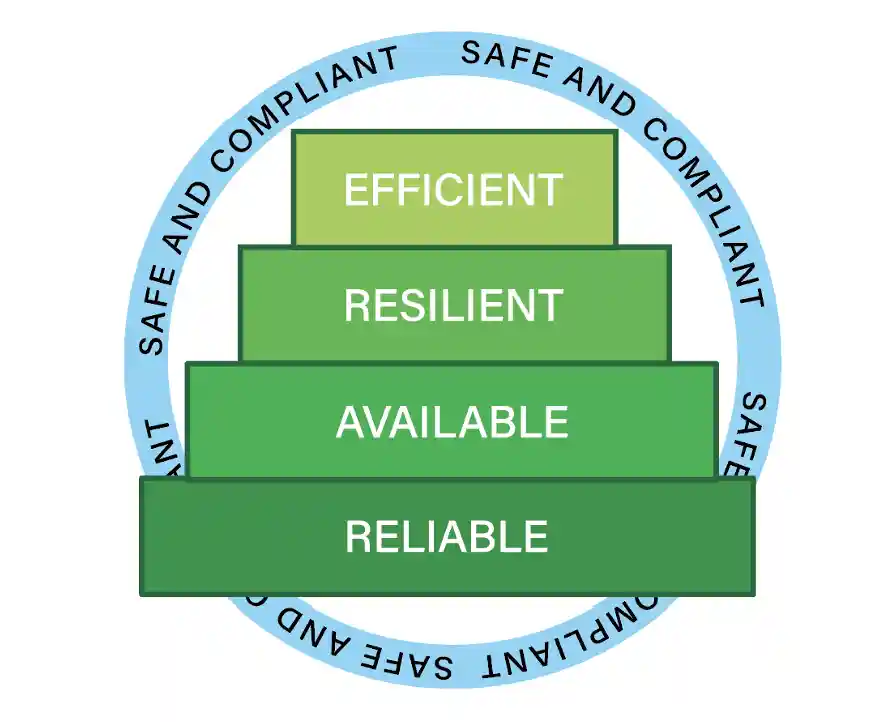
A common misconception is that operational excellence of a new power generation facility is observed, measured, and controlled starting from the first day of the operating period. That is, life begins on the facility's Commercial Operations Date (COD). But in reality, factors to achieve operational excellence must be designed into each preceding stage of the new power project, culminating in an exceptional facility being handed over to the operations and maintenance (O&M) team; a facility capable of demonstrating operational excellence from that day forward.
What is power plant resilience? The quality of being able to return quickly to a previous good condition after experiencing an upset condition.
What is an upset condition? An unplanned circumstance likely to have negative impact on generation stability, safety, or compliance. Such condition is typically triggered by factors beyond the operator’s reasonable control such as plant equipment failures, disruptions in fuel supply, or disturbances on the power grid.
Steps to achieve power plant resilience from day 1 include:
- Define the characteristics and intended outcomes of operational resiliency;
- Incorporate these characteristics and intended outcomes into the facility technical specifications;
- Include the technical specifications in applicable tenders and contracts;
- Incorporate specified resiliency into the facility design;
- Construct and commission the facility according to the resilient design
- Embed resiliency in the new O&M programs
- Prove resiliency during the commissioning period
- Hand over a resilient plant to the O&M team at COD
Operational performance of a power generation facility is commonly measured from COD. This may create a false impression that power plant equipment life begins on that date, when in reality, life begins much sooner. At the earliest, one could reasonably argue that equipment life begins when the associated purchase specifications are written. Or one can take the view that equipment life begins in the pre-construction laydown area, but certainly not later than that!
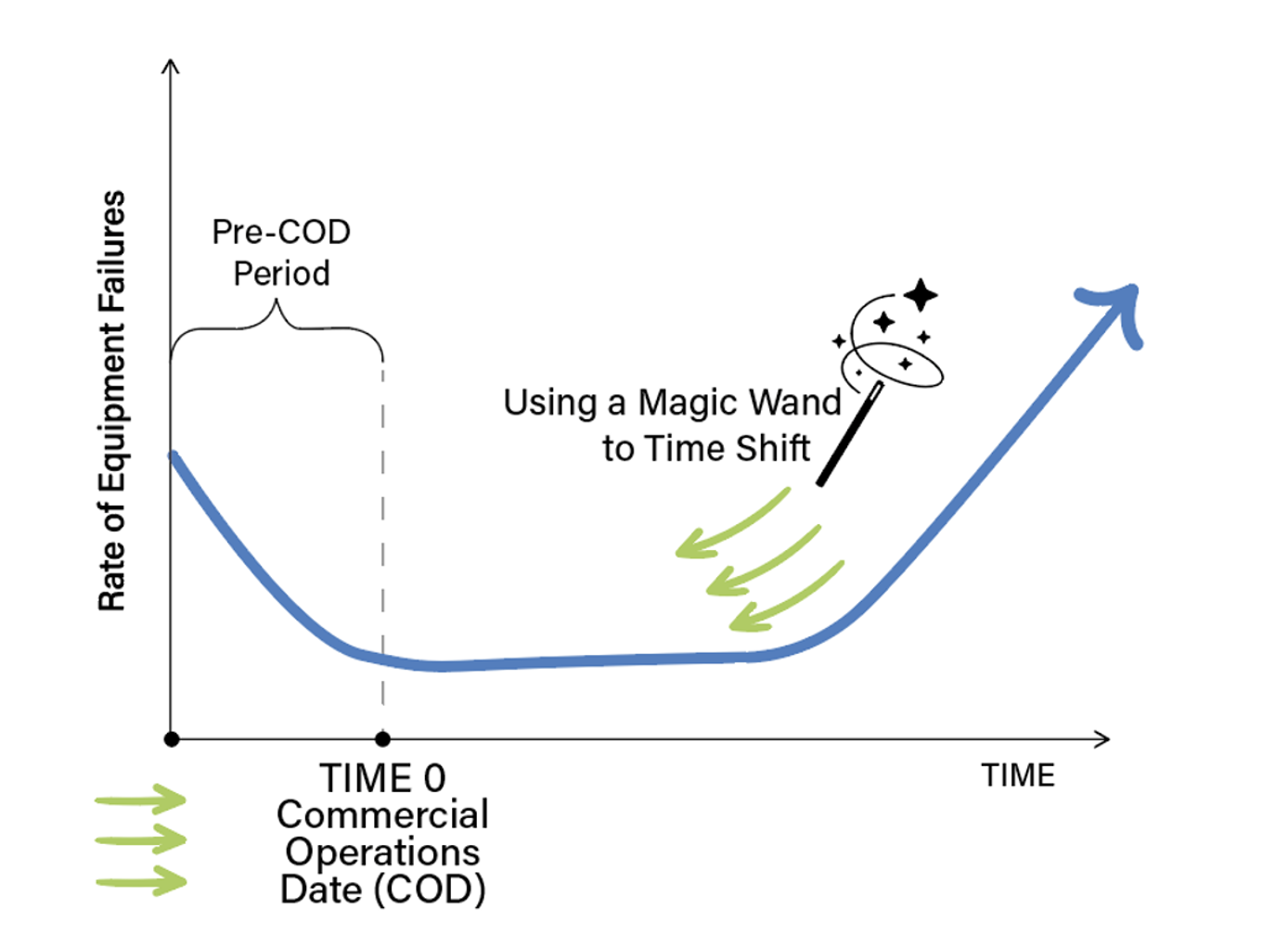
Before using our handy magic wand to time-shift (yes, we now have a magic wand), let us briefly consider the negative circumstances possibly arising before the first day of commercial operation (COD). That is, negative circumstances possibly contributing to the expected high rate of equipment failures early in life.
Possible Contributing Factors:
- Lack of detailed technical specifications
- Poorly-vetted contractors selected for the project
- Insufficient budget allocated for the owner’s engineer
- Insufficient internal resources assigned to the project
- Unrealistic expectations of commercial harmony instead of the always-present commercial conflict
The Result: Risks cascading toward the operating period.
Pressures to Achieve COD:
- Investor/management pressure to start the billing period
- Lender pressure to begin receiving debt payments
- Pressure from insurers not to extend construction period policies
- Pressure from contractors to receive milestone payments
The Impact: Substantial pressure to declare COD and accept the plant.
Commercial Status at COD:
- Uncertain results of plant reliability and performance tests
- Unresolved significant items remaining on the punch list
- Contractor obligations for handover (to O&M) not yet all met
- Unresolved claims and back-charges still pending
Commercially: Conditions for COD are not yet achieved.
Plant Status at COD:
- Equipment not yet fully commissioned
- Control loops not yet all verified
- Some plant equipment is still out for repair
- Some critical spare parts are not yet on site
Technically: The plant is not ready for reliable, unrestricted dispatch.
If some or all of the above negative circumstances exist, the expected result is that the plant is prematurely declared commercial and immediately thereafter experiences a period of repeated trips, load reductions, and forced outages until gradually, one by one, the causes are eliminated. Hopefully, absent any fatal flaws, operational stability is achieved by end of the warranty period.
If none of the above negative circumstances exist, equipment failures early in life are still expected, albeit to a lesser degree because perfection simply does not exist in the engineering, manufacture, and installation of industrial equipment. So, while we cannot completely stop early-life equipment failures from happening, we can and should make strong efforts to reduce their number and impact on plant operations from day 1 onward.
The Bathtub Curve
When owners focus on the front end of the bathtub curve, where early-life failures are expected to be unusually high from the first day of commercial operation, they hopefully drop to a low rate by the end of the initial warranty period. Such “infant mortality” failures are due to as-yet unproven engineering and construction practices employed during the earlier stages of the project life cycle.
Time-Shifting Into Pre-COD With Our Magic Wand
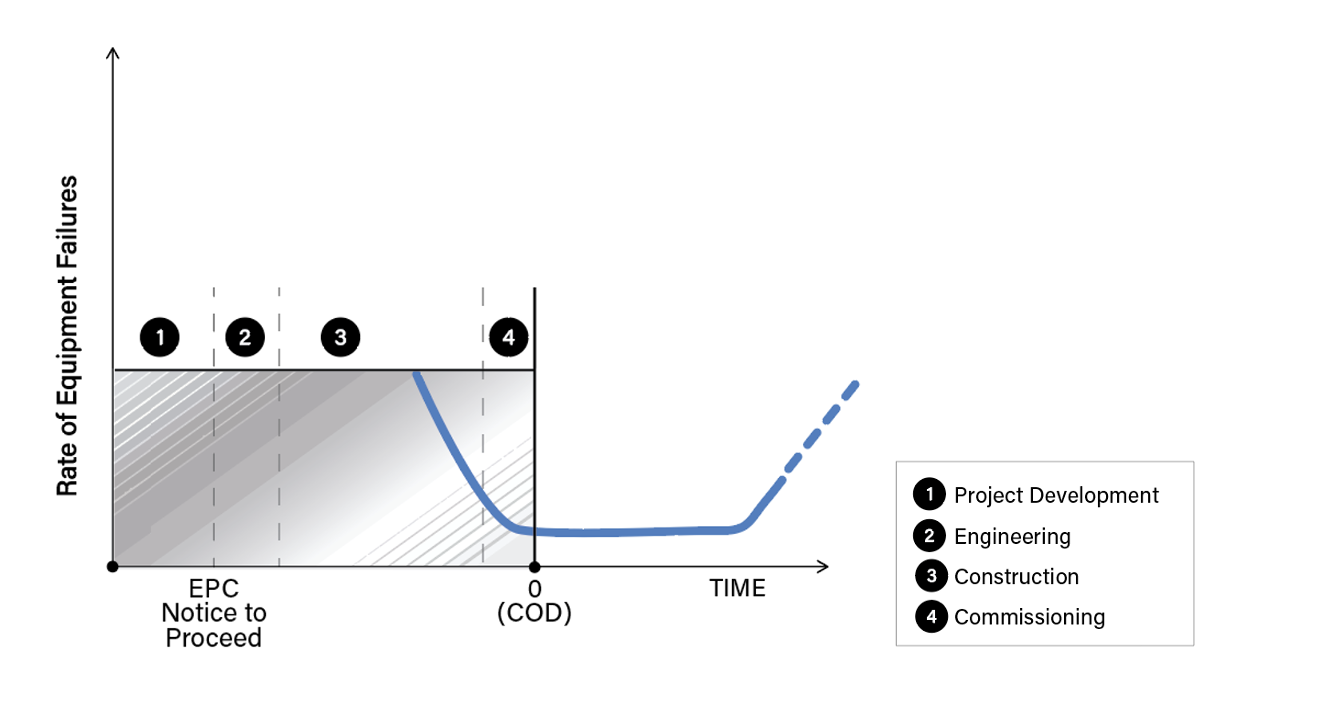
Using a magic wand to time-shift most of our early-life equipment failures into the pre-COD period we expand the pre-COD period into the various stages: (1) project development; (2) engineering; (3) construction; and (4) commissioning and embed reliability and resilience into each phase of the EPC lifecycle.
Proving Resiliency During the Commissioning Period
Minimum content of the inspection and test program is set by fire protection standards, the grid code, interconnection agreement, fuel supply agreement, off-take agreement, applicable engineering codes and standards, and local statutory requirements.
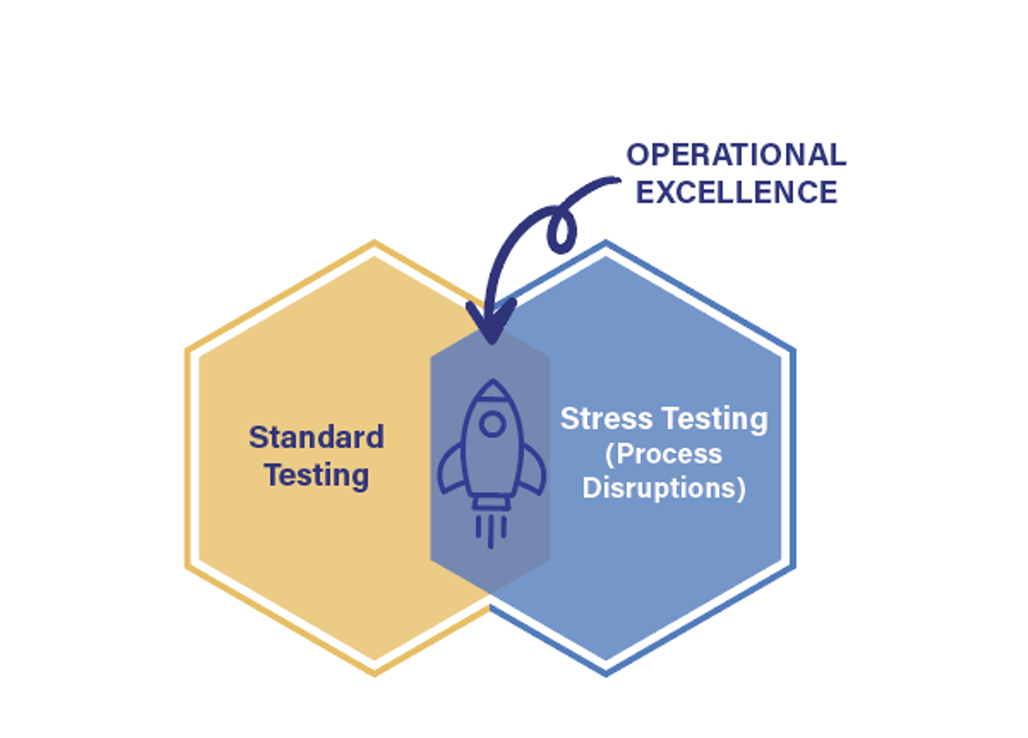
Our process goes beyond standard testing; we create test procedures to simulate process disruptions in order to stress test and demonstrate plant resilience as per our design.
Operational excellence is not an accident and, with early attention, may be achieved from the first day of commercial operation. Along with other key performance characteristics, operational resilience is by design.